My husband became my caregiver instead of my partner. Then a friend asked one question that changed everything.
After 12 years of chronic spinal stenosis and a fusion looming — a 67-year-old from Charlotte writes the warning she wishes someone had given her before she let it get this far.

3,791 Ratings

Mary Calloway

If you've been managing chronic spinal stenosis for years — and you've tried everything physical therapy, injections, and pills have to offer...
If you've already had a fusion or laminectomy and the pain came back anyway — or if your doctor keeps saying "the next surgery is just a matter of when"...
If your husband has quietly started doing everything — the cooking, the laundry, the lifting, the things you used to do without thinking — and you've stopped knowing how to thank him...
If you've found yourself, more than once, looking at the man you married and realizing he's become something else to you now — your caretaker, not your partner...
Stop scrolling.
Don't book another round of injections.
Don't schedule the next surgery.
Don't go quiet.
Read this first.
I'm writing this because two years ago I was exactly where you are.
After 12 years of spinal stenosis and an L4-L5 fusion being discussed at my next appointment..
I was about to let my husband spend the rest of his retirement being the person who took care of me.
Then a friend from my bookclub asked me one question that no doctor in 12 years had thought to ask.
About a single muscle in my spine.
A muscle nobody had ever tested.
A muscle that — once we got it firing again — gave me back the husband I'd been quietly losing for a decade.
How Bad It Got

I'm not someone who tells these kinds of stories. I worked as a bookkeeper for 38 years. I'm practical. I don't post on Facebook.
But what happened to me almost cost me the marriage we'd spent 41 years building.
And nobody warned me. So I'm warning you.
In November 2024, my husband helped me take a shower.
Not for the first time. He had been helping me for almost a year by then. Stepping me in carefully.
Reaching for the soap because I couldn't bend forward without my left leg giving out from underneath me.
But this particular morning, I was sitting on the little plastic chair he had bought to put inside the shower, and he was washing my back the way you would for a child, and I looked up and saw his face in the mirror.
He was looking away.
He wasn't looking away because he was disgusted. He was looking away because he could see that I was crying, and he knew that if our eyes met I would be ashamed.
That was the morning I realized what I had become.
Not what was happening to my back. What was happening to my marriage.
For 41 years, this man had been my husband. We had raised two children together. We had buried both his parents and both of mine. We had hosted Christmas for 19 people every year.
And now, on a Tuesday morning in November, he was washing me.
When I got out, I sat on the edge of our bed wrapped in a towel and I cried for an hour. He brought me coffee and sat next to me and didn't say anything for a long time.
Then he said: "Mary. I love you. I will do this every day for the rest of my life."
And I knew that was true. And I knew that was the problem.
He was 69 years old. He had retired five years earlier. He was supposed to be playing golf with his brother. He was supposed to be taking the camper out to the Smoky Mountains the way we'd talked about for two decades.
Instead he was washing his wife.
I had become someone who couldn't stand long enough to make dinner. Someone whose husband had become — and I will never forget the moment our neighbor said it out loud at a barbecue that summer — "Bob's an angel. He's such a good caregiver."
A good caregiver. Not a good husband. A good caregiver.
I was 67 years old. And I had let my husband become my caregiver.
The 12 Years That Took My Marriage From Us

It started in 2013. I was 55, two years from retirement. The MRI showed moderate spinal stenosis at L4-L5.
The orthopedic surgeon was reassuring: "Most patients manage this conservatively for years. Surgery is a last resort."
I felt better. I shouldn't have.
Here is the parade I went through over the next 12 years:
Physical therapy. Four rounds. Each helped for a few months, then the pain came back, often worse.
Epidural injections. Five in total. The first gave me four months of relief. The fifth gave me three weeks.
Chiropractic. Two years of weekly visits. He'd realign me, I'd feel wonderful for the drive home, and by the next morning everything had shifted right back.
Painkillers. Gabapentin. Then Lyrica. Each made me a different version of foggy. I gained 16 pounds I never lost.
A TENS unit. Back braces. Yoga. Aquatic therapy. Acupuncture.
By 2020, I had spent over $28,000 trying to fix my back. And I had gotten progressively worse.
But the parade isn't the worst part. The worst part is what was happening underneath it.
In 2014, Bob started doing the grocery shopping. I couldn't walk through the store without leaning on the cart.
In 2016, he took over the cooking. Standing at the stove for 30 minutes wasn't possible.
In 2021, he stopped asking if I wanted to come along when he visited his brother. He just went. He knew the answer.
In 2024, he was washing me.
The MRI in October 2024 showed the slip had progressed and there was new evidence of nerve damage.
My surgeon brought up L4-L5 fusion for the first time.
I went home and told Bob. He said: "Whatever it takes, Mary. We'll figure it out together."
He said it the same way he had said it about everything for 12 years. Without complaint. Without hesitation.
And that was when I understood: this man was going to spend the rest of his life being my caregiver. And I was going to let him. Because I didn't know how to stop it.
The Conversation That Saved My Marriage
A week after the shower morning, I went to bookclub. I almost didn't go. Bob drove me and waited in the car so I wouldn't have to walk through the parking lot alone.
I had been going to that bookclub for 19 years. They had watched me deteriorate slowly across all those years.
That afternoon, after we'd finished discussing the book, my friend Joan asked if she could walk me out to the car.
I had known Joan for 22 years. Her older sister had developed severe spinal stenosis in her mid-fifties, and Joan had watched the same slow caregiving collapse happen in her sister's marriage — until her brother-in-law had a stress-related cardiac event at 64 and her sister realized what she'd let happen.
In the driveway, before we got to Bob's car, Joan said:
"Mary. Has anyone ever tested whether your multifidus is firing?"
I didn't know what she meant. I'd never heard the word.
In 12 years. Across six specialists. Through three MRIs. Through dozens of rounds of physical therapy.
Nobody had mentioned the multifidus.
Joan asked her question. I said no. She said: "That's what I thought."
After her brother-in-law's heart scare, Joan had spent over a year reading why chronic back pain wears down everyone around it.
What she had found was a pattern most surgeons knew about but didn't address.
A muscle that goes silent when the spine experiences chronic pain.
A muscle that nobody was checking, because nobody was trained to check it.
She had been afraid to bring it up to me for almost two years. I told her she should have done it sooner.
What Joan Told Me That Afternoon
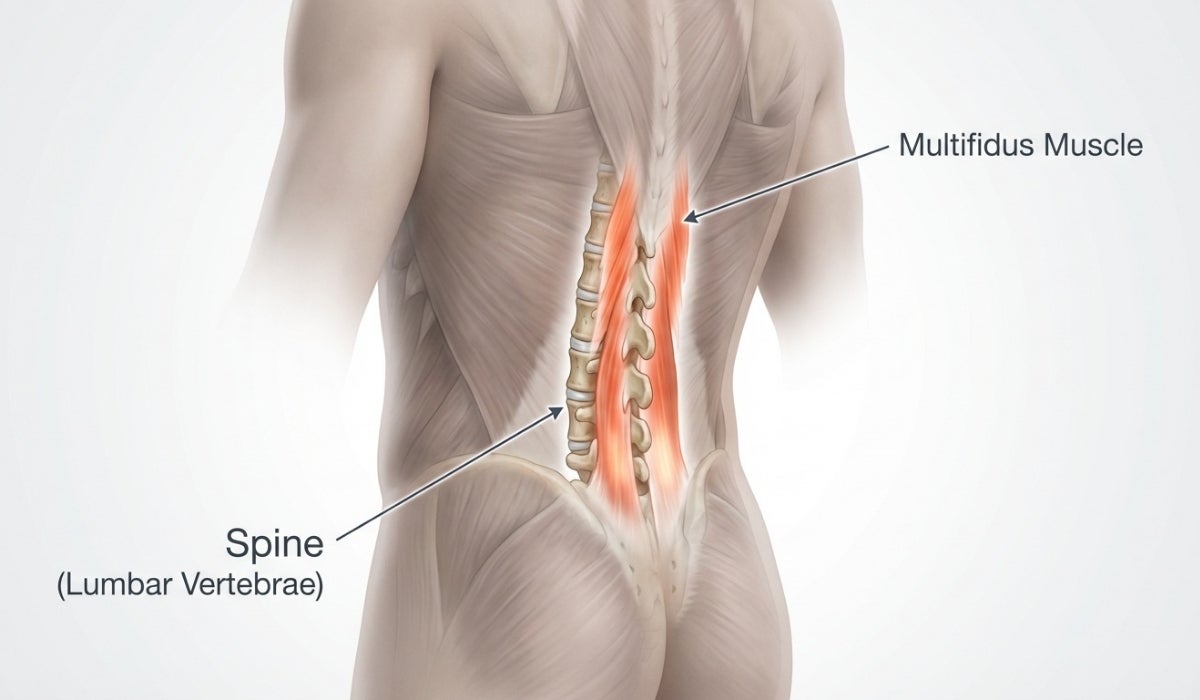
There is a long, deep muscle that runs along both sides of your spine. It's called the multifidus.
It sits about 3 centimeters beneath the skin of your lower back. You have never been shown it on a diagram.
Your surgeon doesn't point to it on your MRI.
There is no standard imaging that tests whether it's working.
But it is the single most important muscle in your spine. It is your spine's internal brace.
Every time you stand, walk, bend, or turn — this muscle fires thousands of tiny contractions per minute to hold your vertebrae in alignment.
It absorbs approximately 60% of the compressive load on your lower back.
When this muscle is working, your spine has support. When it shuts down, your body weight collapses directly onto your discs and your nerves.
And here is what Joan told me that made me put my coffee cup down:
"Mary. Your brain shut this muscle down on purpose. Twelve years ago. As soon as the stenosis started causing pain."
It's a protective response.
When the spine experiences chronic pain — stenosis, a disc problem, surgery — the brain cuts the signal to the multifidus.
Within 48 hours, it can lose up to 80% of its function. It atrophies. It goes silent.
And it does not come back on its own.
Not with stretching. Not with strengthening. Not with physical therapy. Not even with surgery. Because the muscle is not weak. It is locked.
Researchers call it Core Muscle Lockout. You can't strengthen a muscle that isn't firing.
Why Every Treatment Had Failed Me

I sat in our kitchen that afternoon and cried for twenty minutes. Bob came in and sat with me while I cried. He didn't ask. He just sat.
Because for the first time in 12 years, everything made sense.
The physical therapy hadn't worked because they were strengthening surface muscles around a foundation muscle that wasn't firing. Building a house on quicksand.
The injections had given me diminishing returns because they reduced inflammation but didn't reactivate the muscle.
The TENS unit had been useless because TENS reaches 5-8 millimeters deep.
The multifidus sits 30-50 millimeters deep.
And the fusion they wanted to schedule would have made it worse — the procedure retracts the multifidus to access the spine, damaging the nerve branches feeding it.
Joan's sister had ended up with adjacent segment disease for exactly this reason.
I didn't have a back problem. I had a muscle that had been turned off for 12 years.
The Only Thing That Reactivates It
Joan told me there was exactly one thing on earth that could wake up a multifidus that had been locked for years.
Not another surgery. Not more physical therapy.
It was a specific type of electrical stimulation called NMES — Neuromuscular Electrical Stimulation.
Not TENS. She was very clear about this. TENS sends weak pulses to the surface — 5-8 millimeters deep.
It buzzes and distracts the pain signal, but does nothing to the actual muscle.
NMES sends targeted electrical signals 30-50 millimeters deep — directly into the muscle tissue.
It bypasses the brain's "off" signal entirely. It doesn't ask the multifidus to fire.
It makes it fire.
NMES has been used in elite sports medicine for forty years — how Olympic athletes recover from surgery in weeks, how astronauts prevent muscle atrophy in space.
But for forty years, it was only available in clinics at $300 per session.
Joan told me about a device that had recently come on the market — calibrated to reach the multifidus at the exact depth — that you could use at home.
She said: "Mary. Give it ninety days. Before you let him spend another year doing this for you."
That night I told Bob. I said: "Bob. I've spent $28,000 on things that didn't work. I don't have it in me to be hopeful about one more."
He said: "Mary. It's $99. Let Joan have this one."
I ordered it that evening.
The Device That Gave Me Back My Husband
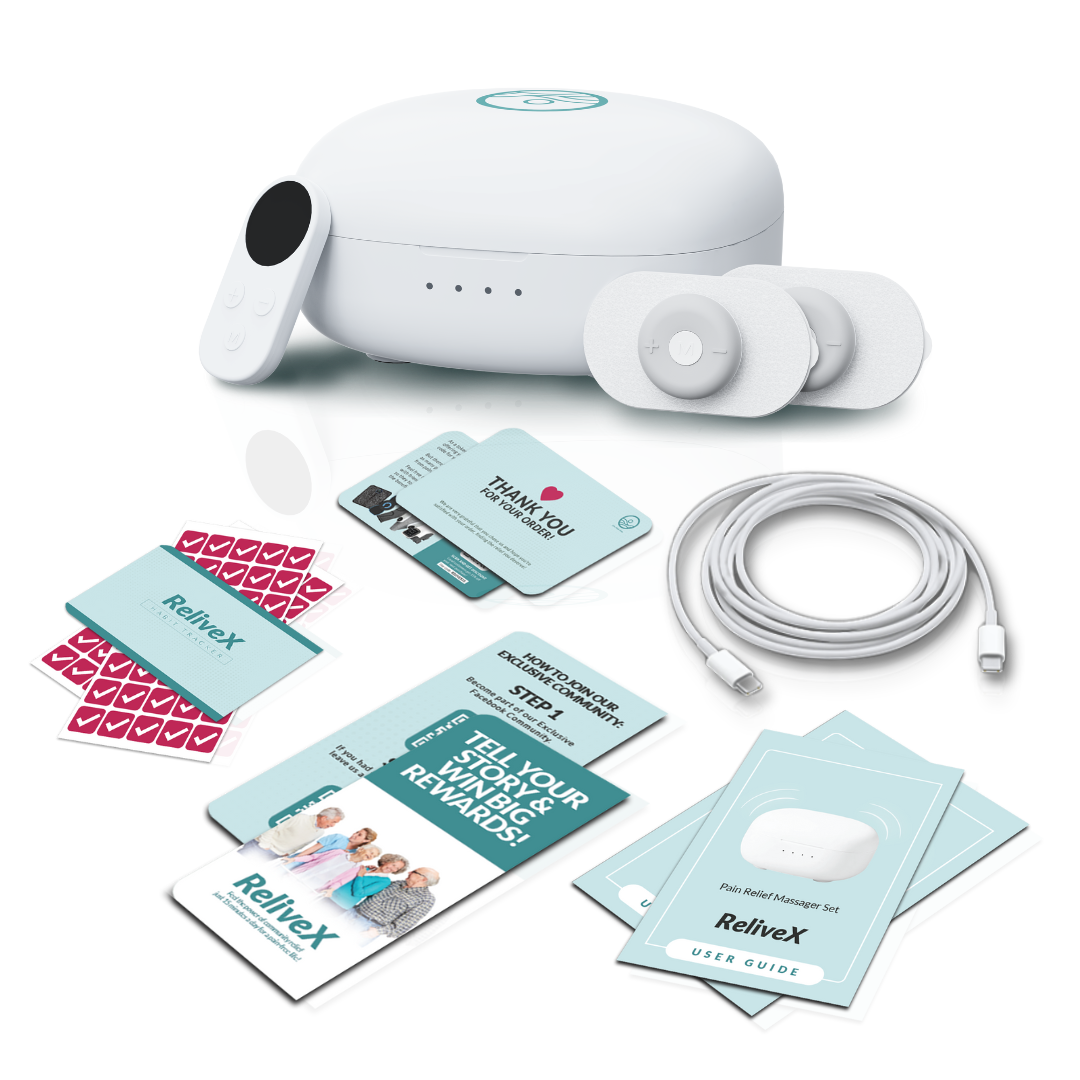
It's called the ReliveX Adaptive Correction System.
It's the first at-home NMES device specifically calibrated to target the multifidus at 30-50 millimeters — the exact depth needed to break a Core Muscle Lockout.
But here's what made it different: it doesn't just stimulate the muscle.
It decompresses the spine AND rebuilds the muscle at the same time.
Two phases in every 15-minute session.
Phase A — Decompression: The moment you turn it on, electrical pulses trigger rhythmic contractions in the deep stabilizing muscles along your spine.
Pressure lifts off the nerves.
I felt it within the first two minutes — a deep opening sensation, like something I had been carrying for 12 years had finally set itself down.
Phase B — Re-Education: While Phase A is creating space, Phase B forces the multifidus to fire.
The brain that cut the signal years ago starts to register the pulses again. Over thirty days, the neural pathway rebuilds.
Fifteen minutes a day. That is the entire protocol.
What Happened Over the Next 90 Days
Day 1: I felt the deep pulse. I cried after the session. Not from pain. From recognition. Something inside my back had moved that had not moved in 12 years.
Week 1: I slept four hours in a row for the first time in two years.
Week 2: I took a shower by myself for the first time in over a year. I didn't tell Bob beforehand. He came home from the hardware store and I was sitting on the couch with wet hair.
He said: "Mary?" and I said: "I did it myself."
He sat down on the floor next to the couch and held my hand for a long time.
Week 4: I made dinner. The whole dinner. Standing at the stove. Chicken, mashed potatoes, green beans.
Bob walked in from the garage and stopped in the doorway and just looked at me. I said: "Sit down. I'm cooking."
Week 6: I drove to bookclub by myself. Bob didn't have to wait in the car.
Week 10: Bob and I went to the Smoky Mountains. The trip we had talked about for twenty years and never taken.
We stayed four nights. I hiked a short trail with him.
He walked behind me — not to catch me if I fell. Just because the trail was narrow.
Week 12: I went back to the surgeon. He examined me. He compared the imaging.
Then he said: "Mary. What did you do?"
I told him.
He took notes.
He said the fusion conversation could wait.
Maybe indefinitely.
Where I Am Now

It is June 2026. I am eighteen months out from that first session.
The plastic shower chair Bob bought me sits in our garage. We're talking about donating it.
Bob plays golf with his brother every Thursday now. He goes to the camper for weekends with his oldest friend. He has his life back.
So do I.
He is no longer my caregiver. He is my husband again.
I still use the ReliveX Adaptive Correction System fifteen minutes every morning.
It is now my maintenance routine, not my recovery protocol.
The L4-L5 fusion the surgeon had been bringing up was never scheduled.

Charlotte Hudson

Cancelled my fusion surgery
Reviewed in the United States on Januari 27, 2026
Verified Purchase
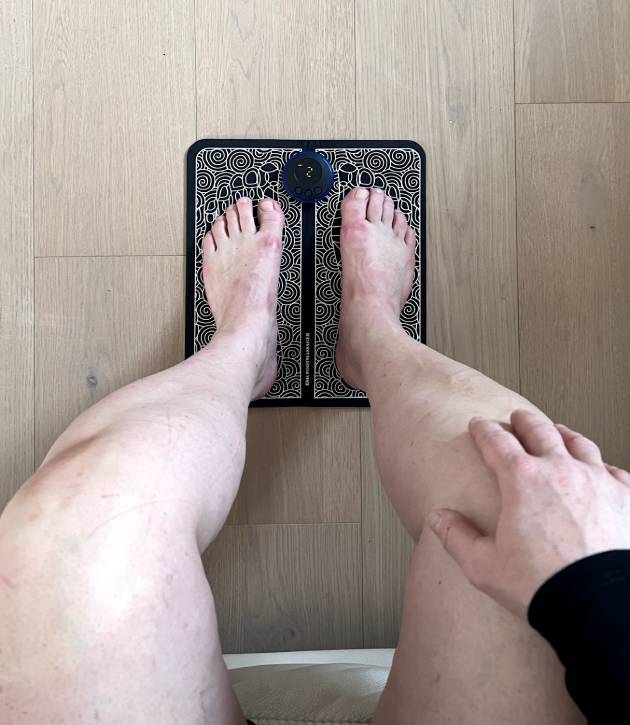
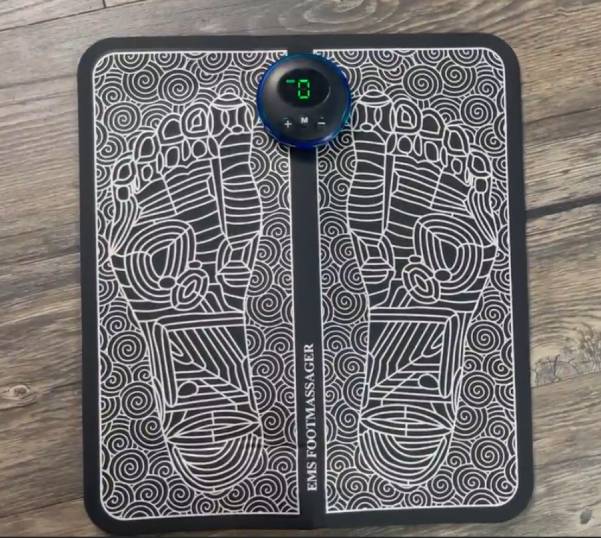
I was scheduled for L4-L5 fusion in February. Told by three surgeons it was my only option. My daughter-in-law, who's a nurse, begged me to try ReliveX first — she said fusion patients come back in pain more often than surgeons admit. I cancelled the surgery. 10 weeks in and I'm walking 2 miles a day. I gardened for the first time in 4 years last weekend. The shopping cart stays in the cart rack now where it belongs.
76 people found this helpful

William Boxall
Wish I'd had this before surgery
Reviewed in the United States on April 12, 2026
Verified Purchase
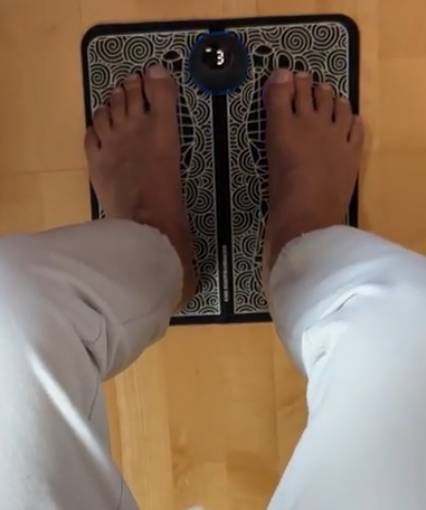
4 days ago Had laminectomy 2 years ago. "Hardware looks perfect" they said. Meanwhile I couldn't stand at my own kitchen counter. Nobody ever mentioned the multifidus to me. 6 weeks with ReliveX and my back finally does its job again.
53 people found this helpful

David Barger
TENS you feel on your skin. This you feel DEEP.
Reviewed in the United States on April 21, 2026
Verified Purchase
1 day ago $3,000 wasted on TENS units, heating pads, inversion tables. My husband rolled his eyes when the box arrived. Three weeks later I slept through the night for the first time in 6 years. I cried at 4 AM because nothing hurt.
AS SEEN ON

What I Want You to Know
If you are reading this — and you recognized yourself or your husband somewhere in this letter — please listen to me.
Whether you've been managing stenosis for years and the slow caregiving collapse is happening in your house too,
or you've already had surgery and the pain came back,
or your husband has quietly stopped asking you to come along.
Don't book another round of injections. Don't schedule the next surgery.
Don't let one more year of his life become caretaking.
There is a muscle in your back that was shut off — probably years ago — and not a single specialist you have seen has been trained to check it.
I almost let him spend the rest of his life on me.
I am writing this so you don't.
You can have your marriage back.
About the ReliveX Adaptive Correction System
If you want the details Joan gave me that afternoon, here they are:
✅ Uses NMES (not TENS) — reaches 30-50mm deep to the multifidus
✅ Dual-Action — Phase A Decompression + Phase B Re-Education
✅ 15-minute auto-shutoff (the exact window needed for reactivation)
✅ Wireless, portable, easy to use
✅ FDA-cleared and CE-certified
✅ Designed specifically for chronic back pain and post-surgical recovery
Today it's available at 50% off — $99.95.
Less than a single physical therapy session.
Less than a month of the Gabapentin I no longer take.
Less than the plastic shower chair Bob bought.
The 90-Day Guarantee

It also comes with a 90-day money-back guarantee.
You can ignore everything I just told you.
You can keep going to PT, keep getting injections, keep letting him do everything.
Or you can take one small, risk-free action by clicking the button below.
Use it for 90 days.
15 minutes a day.
If you don't feel a noticeable difference — send it back.
Full refund.
No questions asked.
If you're someone whose husband has been quietly carrying you for too long — and you're ready to do something about it — click below.
I knew by week two. You will know too.

UPDATE: As of - The demand for ReliveX has increased dramatically and inventory has been flying off the shelves. Order your own for 50% OFF + FAST SHIPPING before it's too late.
Lock in your order while you can to get 50% OFF + FAST SHIPPING
NOTE: This deal is NOT available on Amazon or eBay.

90 Day Money Back Guarantee

Guaranteed Safe and Secure Checkout

No-Hassle Returns

Fast Shipping

Customer Reviews

4.8 out of 5
3,791 customer ratings
5 Star

90%
4 Star

7%
3 Star

2%
2 Star

0%
1 Star

1%
By Feature
Price
5.0
Effectiveness
5.0
Comfort
5.0
Quality
4.8
Comments
Add a comment ...

Wilma Devon
Can anybody vouch for this?
Like · Reply ·
4 · 39 min

Mary Vernon
This little thing is fantastic. My lower back aches constantly. After a long day, 15 minutes with this and the pain is gone. I've got stenosis and a herniated disc on top of that — nothing has helped like this does. Genuinely surprised how powerful it is.
Like · Reply ·
7 · 16 min

Doris Skylar
I bought mine for the full price and now are 50% off? That's not fair!
Like · Reply ·
4 · 51 min

Skyler Greig
How long does shipping take??
Like · Reply ·
1 · 1 h

Marie Campbell
Hey Skyler, got mine after 4 days.
Like · Reply ·
2 · 24 min

Leonard Boyd
My doctor confirmed L4-L5 stenosis two years ago. I'd already had laminectomy and was still in agony — surgeon said everything looked perfect on the X-ray. I couldn't walk more than five minutes without my legs going numb. Started using ReliveX 6 weeks ago. I don't know how to explain it but something feels structurally different — like my lower back actually has support now. I'm walking my dog every morning again. First thing in over two years that didn't just mask the pain.

Like · Reply ·
6 · 1 h

Emma Emerson
Three epidurals in eighteen months. First one worked beautifully. Last one lasted maybe two weeks. My doctor started talking about fusion and I panicked. A friend sent me this article and honestly I rolled my eyes — I'd tried every gadget out there. But the explanation about the multifidus finally made sense of why nothing ever held. Six weeks in and I've cancelled my surgical consultation. I'm not pain-free but I feel stable for the first time in years.
Like · Reply ·
2 · 2 h

Lois Clive
Wow, this is crazy, have ordered one now!
Like · Reply ·
3 · 1 h

Alfred Johnson
Did you buy one, how long does it take to get it
Like · Reply ·
2 · 2 h

Edith Ashton
For me 4 business days.
Like · Reply ·
5 · 2 h

Debra Peyton
I was waking up at 3AM every single night unable to roll over. Spent thirty minutes every morning just warming up enough to walk to the kitchen. I was embarrassed to tell people how small my world had gotten. The shopping cart thing in this article — that was me, every single grocery trip. Four weeks with ReliveX and I'm sleeping through the night. I get out of bed like a normal person. That alone is worth everything.
Like · Reply ·
1 · 3 h

Paula Remington
Wow looks amazing, does anyone actually have one and has it been tested?
Like · Reply ·
1 · 3 h

Sarah Dudley
Yes, I purchased this device for my mom who's been suffering from spinal stenosis.
Like · Reply ·
3 · 2 h

Agnes Graeme
I just ordered mine! Cannot wait for it.
Like · Reply ·
4 · 3 h

Barbara Bradly
I want one so bad, I'm gonna buy it this weekend when my paycheck hits lol!!
Like · Reply ·
8 · 3 h

Ethel Dean
Does anyone know how long the shipping takes? Want to buy one for my friend.
Like · Reply ·
1 · 4 h

Clara Milton
Hey Ethel, mine arrived after 5 days
Like · Reply ·
2 · 2 h

Emma Shelby
Your friend will be happy! Perfect gift
Like · Reply ·
2 · 1 h

Bridget Prescott
Love this Relivex totally!
Like · Reply ·
3 · 4 h
Clara Milton
I absolutely love my ReliveX, had to get one for my daughter today since she wont stop using mine!
Like · Reply ·
2 · 5 h

Kate Orson
OMG I know, I was so happy that they had some left today. Had to get one immediately before they run out of stock again like last time
Like · Reply ·
5 · 2 h

Isabella Mayson
This product is amazing! For anyone who has ever used an older model TENS device: you end up completely tangled in the wires, and if you need to use it at work to reduce flare-ups, it’s impossible when you have a job that requires a lot of movement. This product frees you from all that and allows you to use it safely. Thanks to whoever created this product.

Like · Reply ·
3 · 5 h
MEDICAL & HEALTH DISCLAIMER: The information and other content provided in this page, or in any linked materials, are not intended and should not be construed as medical advice, nor is the information a substitute for professional medical expertise or treatment.
If you or any other person has a medical concern, you should consult with your health care provider or seek other professional medical treatment. Never disregard professional medical advice or delay in seeking it because of something that have read on this page or in any linked materials. If you think you may have a medical emergency, call your doctor or emergency services immediately.